
Thinking About Downsizing in Toronto? Read This Before You Do Anything
Thinking About Downsizing in Toronto? Read This Before You Do Anything
Thinking About Downsizing in Toronto? Read This Before You Do Anything
I don't know what it was about last year, but everything that could go wrong in the house went wrong. First, it was the heater. Then the pool liner started to fade. Then it was the air conditioner. Everything around the house needed maintenance time and sucked money out of the bank account. In a house that is about 20 years old, I kind of expect things like this to pop up. But it's really frustrating when it becomes more and more of a maintenance nightmare, and you have to evaluate whether you need the size of the house you have.
Let's face it. My husband and I, and the one kid that's left at home, are constantly living in a couple of rooms. It's the family room. It's the kitchen and the bedroom. And we are endlessly maintaining, cleaning, and beautifying spaces we no longer spend any time in. I knew that as the holidays ended, I would put the seasonal stuff away. And honestly, I'm getting more and more tired of going back to clean the crawl space again, clean the cold cellar again, reorganize, purge and purge. And I'm just asking myself how much longer we need a house this big and need to maintain rooms that we are never going to use.
That leads me to why I'm writing this post today. I know many of you are in that same situation right now, and the emotional part of moving is holding you back.
Downsizing a home in Toronto requires careful planning across five areas: creating a realistic timeline, obtaining an accurate, current home evaluation, choosing the right neighbourhood for your next stage of life, budgeting for hard costs like commissions, staging, and moving, and starting the decluttering process early. The biggest mistakes happen when homeowners rush the process, rely on outdated home valuations, or wait until a health crisis forces their hand. This guide covers it all, based on what I've seen working with Toronto families through this exact transition.
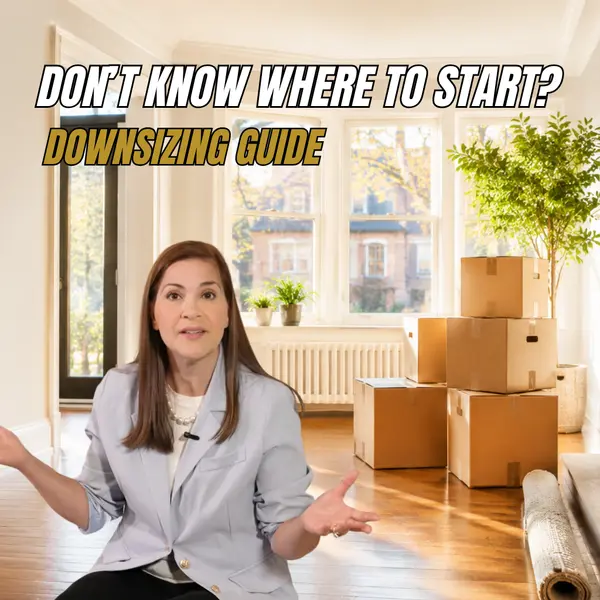
Want the complete step-by-step guide? Download our Free Toronto Downsizing Guide for a full breakdown of timelines, costs, neighbourhoods, and the biggest mistakes to avoid.
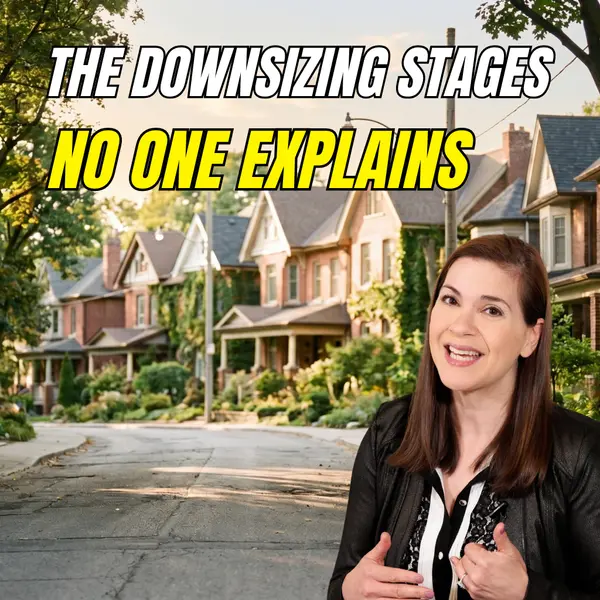
The Emotional Part of Downsizing No One Talks About
The emotional side of downsizing is often harder than the logistics. Leaving a home full of memories, admitting that your needs have changed, and facing the sheer volume of work involved can keep people stuck for years. Acknowledging that this is an emotional process, not just a real estate transaction, is the first step toward making a good decision on your own terms.
Many of us are at home. We're quite comfortable, and we know we're going to be downsizing down the road, but we're not ready to rip off the band-aid just yet or start the process, which can be very emotional. Maybe you've had so many fond memories in your home. Maybe you just love your space. Maybe you've renovated to your taste, and you just don't want to deal with the realities of your health situation, or you've got to buckle down on finances. You just want to push off and postpone the reality and not have to look for a solution because you love where you are and you just don't want to open Pandora's box to that big, ugly move that takes a lot of work, especially if you've been in your home for a long time.
But here's what I've learned after helping hundreds of Toronto families through this process. There are many pros to downsizing. And there are some cons that sometimes people don't think about or skip over. So let's talk about both honestly.
Create a Realistic Timeline (But Don't Wait for Catastrophe)
A good downsizing timeline in Toronto typically takes 6 to 18 months from initial planning to closing on your next home. The ideal approach is to start planning while you're healthy and in control of the decision, not after a crisis forces your hand. The process involves creating a written plan, getting your home evaluated, decluttering, and exploring neighbourhoods, all before your home ever hits the market.
The first thing is this. And this won't apply to me because I don't rush into things. I like to take my time. I'm list-oriented, and I like to check and double-check before I go ahead and do most things in life, especially making that move. I don't recommend rushing the timeline. But on the other hand, I also don't recommend staying in place until something catastrophic forces your hand to move.
I'm a planner. I think having a list of things that need to be done, organized, and dealt with well in advance is the best way to succeed. So if you don't have a list and you're thinking a downsize might be in your future, I would say grabbing a pen and paper and making a good old-fashioned list to start your timeline makes the most sense.
Once you have an idea of when you'd like to make your move, you can have this beautiful plan to tuck away in a filing cabinet. And if things change with your health, finances, family situation, or your children's situation that impacts your move, you can certainly take out that list, look at the plan, and go, all right, let's get to it. We're going to accelerate and put this plan into motion.
But if you don't have a plan, then you've got nothing to take out. You don't have a roadmap, and it's going to feel very pressure-filled and stressful. The most important thing is to be realistic about the timeline. Downsizing is a major lifestyle change and should be approached with care and with a plan.
Get an Accurate Home Evaluation (This Is Where Most People Get It Wrong)
A home evaluation for downsizing purposes should be based on comparable sales from the last 30 to 90 days, use homes of similar size and condition, and be prepared by an agent who can defend every number with current market data. Evaluations older than a few months or based on outdated comparables are unreliable in Toronto's fluctuating market. The most common mistake is hiring the agent who quotes the highest price, because inflated evaluations lead to longer time on market and eventual price reductions.
We can all look back on the last few years and assess the pricing of our home based on some of the sold data that we saw 10 doors down. Maybe your neighbour sold their home. And we have an idea of what it was worth a few years ago. But the biggest mistake you can make is to look backwards when analyzing your home's value.
I would say it's so important to get an idea of what your home is worth in today's market. And I have to tell you that if I had my home evaluated right now, I don't think I'd be super excited. I don't think I'd be happy with the numbers. But at least I'd have a real sense of what is going on today. Knowing what my house is worth today means I can also make plans or look forward to what is on the other side of my downsize. That would help me determine what community I'm going to move to and how much house I can afford to buy. And it can also help me figure out whether a condo or a detached home is appropriate for me, and the maintenance requirements for both. Without knowing what my home is worth now, I don't really have a sense of what I can do or how much money I'll put away in the bank.
First things first, you want to get a current evaluation of your home, so you have a true sense of where you stand financially. With a market that is fluctuating and changing, it is so important that this evaluation is current and up to date. I would say within the last 30 or 45 days of you trying to execute your plan. If you're trying to evaluate your home today for a potential sale in five years, that's not a bad thing. But you're going to file that away, and we're not going to rely on that five years from now. Or if you had an evaluation two years ago, it's probably fairly meaningless right now. It might be a paperweight because things have changed so dramatically.
The Dirty Little Secret About Home Evaluations
I'm going to tell you a little secret here in the industry. It's a dirty little secret, but sometimes when realtors come in to compete for a listing, someone will come in with the highest number and give you an evaluation that cannot be supported just to win your business. You might have to read that again and let that sink in. There are realtors who will come in and give you a high price they can't defend, just because they know you want to hear it. And you might say, amazing, we're going to hire this person because they think they can get us the highest and best price possible. But I'm telling you, it is a bit of a kink in this industry.
You don't necessarily want to hire the person who gives you the highest and best price possible because it's quite likely that in a month, after taking your listing, they are going to come to you or two weeks later and ask for a price adjustment down. Because guess what? Their unrealistic, unsupported price cannot be defended by the market, or buyers are just not biting, which just means your home is going to sit on the market for much longer. This process of downsizing and exposing your home to the market is going to be uncomfortable. You're going to leave for more showings. And at the end of the week, when you keep going back in and out for all these showings, you're going to come back, and you're going to be asking your agent, is there any interest? Do we have any offers yet? And it's not going to happen because this is not the time to overprice your home. You want to be priced right. And you want to make sure that when somebody gives you a price range for your home, they can back it up with current market analysis.
True story. I saw a market evaluation that somebody had given one of my clients very recently. And can you believe that the comparables that they used were a year, two, and three years old? There was a comparable in this list that was five years old. If I had to go back into the system to see what was selling on my street five years ago, I would be crying. That's not how it works. We want to look at prices from the last 30 days, the last 60 days, and the last 90 days. And they have to be good and comparable. In the evaluation scenario my client showed me, someone was comparing their home to a 3,500- to 4,000-square-foot home, and my client's home is only 2,300 square feet. The math does not math.
Choose Where You're Going (But Don't Put the Cart Before the Horse)
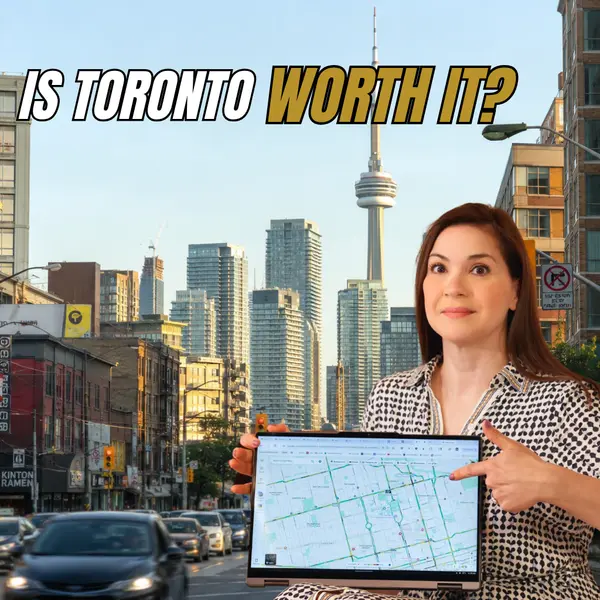
The best neighbourhoods for downsizing in Toronto depend on your priorities: walkability, transit access, proximity to family, community feel, and budget. Popular downsizing destinations include Yonge and Eglinton, Leaside, Don Mills, The Beaches, Lawrence Park, and Summerhill. The critical rule is to know your budget before you fall in love with a neighbourhood, not after.
Once you know what your home is worth, then you can start looking at the other side of the move. Where do you want to go? What neighbourhood fits your lifestyle? Do you want to be close to transit, close to your kids, close to your doctor? Are you looking for walkability? A community feel? Access to parks and restaurants?
When my clients are considering where to downsize to, the neighbourhoods that come up most often include Yonge and Eglinton, Leaside, Don Mills, The Beaches, Lawrence Park, and Summerhill. Each one has a completely different feel, price point, and lifestyle. The key is matching the neighbourhood to your priorities.
I want a place that is physically comfortable, emotionally comfortable, and, most importantly, financially comfortable. I don't want to be squeamish or stressed out in the final move. I want to be happy. I want to put more money in the bank, or I've got more money to travel, and I don't have to alter my plans or ever move again.
You don't want to move again. You don't want to buy something and really stretch yourself or put yourself in an uncomfortable situation and find yourself in a couple of years in exactly the same spot where you bought too much house or you spent too much money, or now you've got a house that needs a whole pile of maintenance and you weren't thinking about it properly because you were rushing to make a decision or you fell in love with something.
If you're not sure whether downsizing is the right term for what you're doing, you might be interested in what we call right-sizing. Right-sizing is about finding the home that fits your life now, not just reducing space. It's a more positive way to think about the move.
Budget for the Hard Costs (Don't Skip This Part)
The hard costs of downsizing in Toronto include real estate commissions, staging, temporary accommodation during showings, professional moving services, storage, and potential minor home repairs before listing. Many of these costs are overlooked until they become urgent, which leads to stressful last-minute decisions and overspending.
Once you've figured out what your home is worth and you've made your list, you want to have a budget that accounts for the costs involved. Whether it is taking care of a leaky sink or a faucet, or doing small home improvements, you want to make sure you consider the budget and hard costs. There are such things as homes that are sold as-is, where-is, and you don't have to do a thing. And there are some other things your realtor can help take care of to make sure your home is ready for the market. Regardless of which way you're leaning, you want to make sure that you consider the budget.
Costs to Consider
Commissions: You've got to consider the commissions when you're selling your home. That is something that you want to have certainty on. If you're interviewing realtors, what is included in the commissions? In Toronto, they vary. There is such a huge array of services that agents may or may not offer. On our team, our services are very much catered to seniors and leaning in to support you. And I can tell you that many of our competitors don't even offer the services we do. And for us, they're just a gold standard.
Staging: You might decide to invest in some staging. You might get advice that staging is something that's required. I'm going to tell you that many really professional realtors who offer a phenomenal array of services, like us, will include staging as part of their services. For our team, staging is free until your home sells. But make sure you have a full understanding of what you are up fronting in costs.
Temporary Accommodation: Some of you may choose to stay in your home, and you will not be moving until the home is successfully sold. And others of you may decide, I'm not up for this. I don't want to be here while showings are taking place. I'm going to stay with my kids or I'm going to stay at a hotel or at an Airbnb until the showings pass and my home is sold successfully. You've got to have a budget to figure out which bucket you're sitting in.
Professional Moving Services: No matter which scenario you decide to lean into, the one thing that you should plan for is professional moving services if your realtor is not offering them. I know a lot of you are thinking your kids will help you. Their kids are going to help you. Your grandkids are all going to come, and they're going to help you move. Do not, do not, do not plan on that. I've seen that intention made in many a family. And I also see it fall apart when kids get busy and leave their parents stranded. I'm going to say: have a clear plan that is your own, or find professionals who can work for you to make sure it runs smoothly and without any surprises.
True story. A couple of weeks ago, somebody's adult son in his 50s had appendicitis and got an infection, and he was supposed to go help his mother, who's elderly, make her move. I had been saying to her all along, "let's get a plan B." They might get busy, something might come up, and she failed to lean into my suggestion. Unfortunately, we had to make a recommendation very last minute to help her move. Everything worked out in the end. But I would say to you, we're not calling a bunch of friends, sharing a pizza and a pack of beer and helping our friends move us. We want to do this professionally.
Storage Solutions: Sometimes people will defer the task of decluttering or reorganizing their home until much closer to their move. I don't like that. I like to get a lot of the hard work done at the beginning so we can move with ease and certainty. There is nothing worse than seeing a client take their 2,500 square foot home, get to their condo with all of the stuff that they thought would fit, only to have to redirect the movers and pay them extra to take it to donation centers last minute or the dump, or simply be told that their content has to be stored on the truck and it is very expensive when that happens.
Decluttering Strategy: Start Early, Not at the End
The most effective decluttering strategy for downsizing is to start 3 to 6 months before listing your home. Get the floor plan of your new space, measure the rooms, and make keep-or-go decisions based on what actually fits. Donate items to charitable organizations for tax receipts, and hire professional movers rather than relying on family members who may not be available when the time comes.
I would say it's so important to have a good decluttering plan well in advance, and to go through your items carefully, and to decide what you're using, what you've got space for in your new home. Get a floor plan if you're making a move to a new home. Get a floor plan done so you can actually see the room dimensions and what rooms you have to work with, and then you can go through your home and start making decisions about what to purge, give away to your children, or give away to charities. Some charitable centers that actually will accept your donations will give you some really great tax receipts, and you know your items are actually going to good use to families in need. There are amazing resources out there. Don't leave decluttering for the end. You want to do that at the beginning, not in the middle or at the end, to ensure you're successful.
We're not in our 30s anymore. And if you are reading this and you're in your 30s and your parents are the ones who are moving, I'm going to tell you it's quite unlikely that your friends are going to come over and start to pack up your parents' furniture professionally or with care like a professional moving company would do. You're going to want to find some amazing movers. Every time we have moved, we have had amazing movers. And every time my clients have asked me for a recommendation, I've shared the same amazing movers so they can move with ease, knowing their valuables are protected and that the move is smooth, with the movers arriving at the destination when they're supposed to and following your instructions.
Common Downsizing Mistakes to Avoid
The most common downsizing mistakes in Toronto include waiting until a health crisis forces the move, relying on outdated home evaluations, choosing a new home before knowing your real budget, depending on family to handle the physical move, and leaving decluttering until the last minute. Each of these mistakes adds stress, costs money, and can derail the entire process.
After helping hundreds of Toronto families downsize, here are the mistakes I see most often:
Waiting Until a Crisis Forces Your Hand: Plan while you're healthy and can make decisions on your own timeline.
Overestimating Your Home's Value: Get a current, realistic evaluation. Don't rely on what homes sold for 2-5 years ago.
Falling for the Highest Price: The realtor who gives you the highest evaluation isn't always the best choice. Make sure they can defend it with recent comparables.
Choosing Your Next Home Before Knowing Your Budget: Be conservative with your numbers. Don't stretch yourself financially on your final move.
Relying on Family to Help Move: Life happens. Kids get busy. Have a professional plan in place.
Leaving Decluttering for the End: Start early. Get a floor plan of your new place. Make decisions about what fits before moving day.
Not Having a Timeline and Plan: Even if you're not ready to move now, create a plan you can pull out when circumstances change.
How We Help Toronto Families Downsize with Dignity
After my mom's experience and helping hundreds of Toronto families through this process, I've built our downsizing services to fill the gaps I saw in the market. We provide honest, current home evaluations with no inflated numbers to win your business. We offer free staging until your home sells, professional moving coordination, decluttering support and resources, neighbourhood guidance matched to your lifestyle and budget, emotional support throughout the process, and a clear timeline and plan you can rely on. We also offer specialized senior real estate services for families navigating health changes, mobility issues, or estate sales.
Next Steps: Start Your Downsizing Plan Today
Whether you're thinking about downsizing now or planning for 3-5 years from now, the best thing you can do is create a plan. Here's what to do first: Make a timeline and figure out when you ideally want to move and what would force you to accelerate. Get a current home evaluation and know what your home is actually worth in today's market. Identify your priorities and figure out what matters most, whether that's walkability, community, proximity to family, or budget. Explore neighbourhoods such as Leaside, Yonge & Eglinton, The Beaches, and others to see what feels right. Create a budget and factor in commissions, moving costs, staging, and all hard costs. Start decluttering early and don't wait until you're under pressure. Build your support team and find a realtor, movers, and services you trust.
If you need help with any of these steps, that's what we're here for. We cover Don Mills, Leaside, Yonge & Eglinton, The Beaches, Lawrence Park, and most of the GTA. We go north, we go south to the lake, and we go east. If you need personalized care, dedicated attention, or help writing that plan, and you do not know where to start, please reach out. It's probably the best way to get a helping hand at the beginning and really get your process going.
Frequently Asked Questions About Downsizing in Toronto
When is the right time to downsize your home?
The right time to downsize is while you're healthy, financially stable, and able to make decisions on your own timeline. Planning 6 to 18 months in advance gives you time to get an accurate home evaluation, explore neighbourhoods, declutter, and list your home when market conditions are favourable. The worst time to downsize is when a health crisis or financial emergency forces your hand with no plan in place.
How much does it cost to downsize in Toronto?
The major costs of downsizing in Toronto include real estate commissions (which vary by agent and services included), staging (some agents like Othen Group include this for free), professional moving services (typically $2,000 to $5,000 depending on distance and volume), temporary accommodation if you choose not to stay during showings, storage fees if needed, and minor home repairs or improvements before listing. Building a detailed budget before you list is one of the most important steps in the process.
What are the best neighbourhoods in Toronto for downsizing?
The most popular Toronto neighbourhoods for downsizing include Yonge and Eglinton (97/100 Walk Score, subway and LRT access), Leaside (parks, trails, low-rise condos and townhomes), Don Mills (Ontario Line transit access, CF Shops at Don Mills), The Beaches (95/100 Walk Score, boardwalk, Queen Street community), Lawrence Park (quiet established streets, heritage character), and Summerhill (heritage charm, subway access, boutique condo options). The best neighbourhood depends on your priorities: transit, walkability, proximity to family, community feel, and budget.
Should I get my home evaluated before deciding to downsize?
Yes. Getting a current home evaluation is the first practical step in any downsizing plan. Your home's value determines your budget for the next home, which neighbourhoods are realistic, and whether a condo or detached home makes more sense. The evaluation must be based on comparable sales from the last 30 to 90 days and use homes of similar size and condition. Be cautious of agents who provide inflated evaluations to win your listing, as this leads to overpricing and a longer time on the market.
What is the difference between downsizing and right-sizing?
Downsizing means moving to a smaller home, typically to reduce maintenance, costs, or unused space. Right-sizing is a broader concept that focuses on finding the home that fits your current lifestyle, not just a smaller one. Right-sizing might mean moving closer to transit, choosing a home with no stairs, or relocating to a neighbourhood with better walkability. It reframes the decision around gaining the right fit rather than losing space.
How far in advance should I start decluttering before a move?
Start decluttering 3 to 6 months before you plan to list your home. Get the floor plan of your new space so you can measure rooms and make informed decisions about what to keep, donate, or discard. Charitable donations can provide tax receipts. The biggest mistake is leaving decluttering until the final weeks before moving, which leads to rushed decisions, extra moving costs, and expensive last-minute storage.
Can I rely on family to help me move?
You should not count on family as your primary moving plan. Life happens, schedules change, and adult children may not be available when the day comes. Professional movers ensure your belongings are handled with care, delivered on schedule, and insured against damage. Have a professional plan in place and treat family help as a bonus, not the foundation of your move.
Ready to Talk About Downsizing?
Book a free consultation and let's create a plan that fits your timeline, budget, and goals. No pressure, no obligation. Just honest advice from someone who's helped hundreds of Toronto families through this exact transition.
Not quite ready to talk? Start with our Free Downsizing Guide to get a clear picture of the full process, costs, and timeline before you reach out.
Call: 416-486-8282
Email: jacquie@othengroup.com
Book Consultation: othengroup.com/downsizing-in-toronto
Related Resources: Downsizing Services Toronto | Free Downsizing Guide | Right-Sizing Your Home | Senior Real Estate Services | Toronto Neighbourhood Guides
Categories
Recent Posts




GET MORE INFORMATION
