
Moving to Toronto? Here's What You Need to Know First
Moving to Toronto? Here's What You Need to Know First
By Jacquie Othen, SRES | April 2026 | 10 min read
Moving to Toronto requires more preparation than most people expect. The key decisions about which neighbourhood to land in, which school district serves your family, how to handle the commute, and how to get financing in order all need to happen before the search begins, not during it. A Toronto-based real estate professional with genuine relocation experience is the most important resource you can have. Toronto has extraordinary communities for every kind of lifestyle, but finding the right one takes someone who knows the city from the inside. This guide covers every major consideration for anyone relocating to Toronto from another city, province, or country.
Jacquie breaks down everything you need to know before relocating to Toronto: neighbourhood selection, financing, and how to buy sight unseen.
Toronto is a big city. Where you land changes everything.
There is a version of this city for almost everyone. That is genuinely true. Toronto has waterfront communities, walkable urban neighbourhoods, quiet family pockets, buzzing midtown corridors, established east-end streets, and suburbs that feel like small towns. The challenge is not finding a good place to live in Toronto. The challenge is finding the right one for you, specifically, without wasting months in the wrong spot or making a significant financial mistake in a rush.
If you are relocating to Toronto for a job transfer, a life change, or a decision to finally plant roots in Canada's largest city, the most important thing you can do first is slow down enough to understand what you actually need. Not just what looks good on a map, not just what has a short drive to your office, but what community, what lifestyle, and what morning routine you are trying to build. That clarity is what a real relocation experience is built on.
For relocation clients, the team starts every conversation with that question: not "what's your budget?" but "what does your day actually look like?" The neighbourhood that fits your life comes from the answer to that second question. Everything else follows.
Work with a local Toronto expert, not someone from the 905
This one matters more than it might seem. Toronto has area codes: 416 for the city proper, 905 for the surrounding regions. If you ask who someone is working with and you get a phone number starting with 519, 705, or 905, that is a flag worth paying attention to. Those agents serve Waterloo, Peterborough, London, and Richmond Hill. They do not work in the city every day. They do not know which streets have school catchment issues, which pockets are safe after dark, which communities are genuinely in demand versus priced high because they border something better.
Toronto has communities within communities: small pockets that only someone who has been working in this city for years would know to flag. Senior clients relocating closer to family, downsizing clients moving from a house to a condo, families coming in from Vancouver or Calgary: all of them need someone who can say "yes, that block is fine, but three streets east, the school district changes, and two blocks north, the parking situation becomes a problem." You do not get that from someone who covers the GTA at arm's length.
The commute question: get real about it before you choose
Toronto traffic is not a minor inconvenience. It is a daily reality that shapes quality of life in a meaningful way. The city has construction that closes key arterials for months at a time, transit that is improving but slowly, and a highway system that backs up reliably in the morning and evening rush hours. If you are coming from a smaller city where a 15-minute commute is normal, Toronto will recalibrate that expectation quickly.
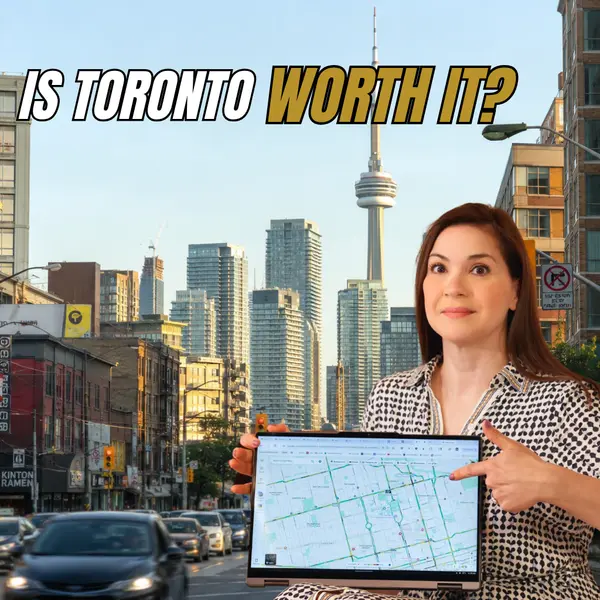
Simply put: test your commute before you commit. The TTC's trip planner is a useful tool. Use it to model your actual journey from a specific address to your workplace at 8:30 in the morning. Factor in that you may be going from bus to subway to streetcar. Factor in that the Eglinton Crosstown, while now operating, runs slowly enough that some people have been clocked jogging alongside it. Factor in what "one transfer" actually means when you are doing it every single day.
Proximity to the Yonge or Bayview corridors, which run north-south through the city, tends to increase both price and commute convenience. Moving further east, north, or west brings more home for the money but longer travel times and greater dependence on a car. Neither choice is wrong. Knowing which trade-off you are making before you make it is the difference between feeling settled and feeling stuck.
Neighbourhood fit goes beyond commute time
Once the commute is handled, the question becomes: what kind of neighbourhood do you actually want to live in? This sounds obvious, but it gets skipped all the time. People test-drive, then stop there. What they do not test is whether the neighbourhood is walkable, whether the coffee shop is an independent or a chain, whether there is a good grocery store within reach, whether there are trails or green space nearby, or whether it feels alive on a Saturday morning.
If you are coming from Vancouver and crave being near water, communities along the lake shore or near The Beaches are worth a serious look. If you want a walkable, pedestrian-first lifestyle in a mature neighbourhood, Leaside or Yonge and Eglinton have the infrastructure to match. If you want established streets with deep character, Lawrence Park and Don Mills each offer something distinct. If a large backyard and a double garage matter more than walkability, the answer is likely to point outside the 416.
Spend real time in each neighbourhood you are considering. Not just a drive-through, but coffee in the morning, a walk at night, a look at what the grocery situation actually is. The standing advice for relocation clients flying in: give yourself at least four to five days of genuine exploration, ideally a full week, and make sure your itinerary includes evenings. How a neighbourhood feels at 10 pm tells you something that daytime visits do not.
Safety is a real consideration. Ask about it directly.
Toronto, like any major city, has neighbourhoods that are great by day and less comfortable at night. It also has neighbourhoods that feel marginal on paper but are perfectly safe and quietly wonderful. The only way to know which is which is to ask someone who works there every day.
If you are a single professional who plans to walk home from late-night work, that question needs to go to your agent directly: is this street safe at midnight? Not every Toronto community answers that question the same way. The right agent will give you a straight answer, not an optimistic one designed to keep the deal moving. That kind of honesty is what working with the right team is supposed to feel like.
Toronto school districts are hyper-local and not what you expect
School districts in Toronto operate differently from those in most other cities. Catchment boundaries are often drawn at the street level, and sometimes at the house-number level. The home at 131 on a given street may fall inside one of the city's most sought-after public school districts. The home at 133 may not. This is not an exaggeration. It is a documented reality that surprises nearly every relocating family that has not been warned about it.
The right tool for this research is the Toronto District School Board website. Do not search by neighbourhood. Search by exact street address and house number. That gives you the specific catchment assignment for that property. Also worth knowing: catchments change. High-demand schools have had their district maps redrawn as enrolment rises, meaning a property that qualifies today may no longer qualify after September. If a specific school is central to your decision, confirm with the board directly before putting in an offer, not after.
The same diligence applies to private schools, Montessori programs, and daycares. Waitlists for quality daycares in desirable Toronto neighbourhoods can run into the hundreds. One relocation client described the search as "the Hunger Games." The practical advice: get on multiple waitlists in your target area as early as possible. Do not wait until you have an accepted offer.
Get your financing sorted before you start looking
Toronto real estate does not wait. When a property that fits your needs becomes available, the window to act can be days, not weeks. Going into that window without a current pre-approval and a lender who understands the Toronto market creates real risk.
If you are coming from another province or another country, the specific challenge is finding someone who knows how Toronto transactions work. Financing conditions here are often three days. In competitive markets, offers sometimes go in with no financing condition at all. A lender based in Calgary or the US, however excellent their relationship with you, may not know how to structure an approval letter that works within a Toronto bidding situation. Your Toronto agent should be able to refer you to someone who has done exactly this kind of transaction before.
Beyond pre-approval, have your deposit ready. In Toronto, the standard deposit is 5% of the purchase price when an offer is accepted. That money needs to be liquid and accessible immediately: in a Canadian bank account, or in a foreign account from which you can wire the funds within 24 hours. If the deposit takes three days to arrange, the deal may not survive the delay.
Buying sight unseen: it works when it is done properly
Buying a home in Toronto without physically being there is more common than people expect, and it works well when the right foundation is in place. The conditions are not complicated: a thorough consultation at the outset, a clear articulation of your needs and hard limits, an agent who is communicative and honest, and a shared understanding of how decisions will get made when time is short.
Sight unseen, clients who do that work at the beginning of the process are consistently satisfied when they eventually walk through the door. They are not surprised by the neighbourhood, the building, or the property itself, because the person who found it for them knew exactly what mattered. Sight-unseen clients who skip the consultation are the ones who end up disappointed.
For most clients, a one-week exploratory visit remains the best approach. Spend mornings and evenings in your target neighbourhoods. Tour properties. Talk to school principals if you have children. Walk to the grocery store. Get on the subway at rush hour. Then go home, clarify your priorities, and give your agent a specific brief. From there, the search can happen effectively, whether you are in Toronto or not.
What to ask when you're interviewing a Toronto relocation agent
Not every agent does relocation well. Some have never moved a client across a province or a country. Some have no protocol for sight-unseen purchases. Some have no network of mortgage brokers, lawyers, or accountants who understand the specific needs of people arriving from elsewhere. Before committing to working with someone, ask these questions directly.
Have they relocated clients from another province, another country, or internationally? What does their process look like from consultation to move-in? Do they have a mortgage broker who specializes in helping people navigate Canadian financing from outside the province or abroad? Do they have a real estate lawyer and accountant they trust to handle the tax and legal considerations that come with primary versus secondary residences and international buyers?
And: if the situation called for it, could they help you make a confident decision sight unseen? An agent who answers that question with real conviction, because they have done it before and have a clear process for it, is a different person from one who hedges. You are making a very large financial decision in an unfamiliar city. The person guiding you should be entirely clear on how they handle exactly that situation.
If you are planning a Toronto relocation and want to talk through where you should be looking, what your budget gets you, and what the process actually looks like, our Toronto relocation services page is a good place to start.
Frequently Asked Questions
What is the most important thing to figure out before moving to Toronto?
Where in the city will you live? Toronto is massive, with dramatically different neighbourhoods, price points, commute times, and lifestyles. The right neighbourhood makes the difference between loving your move and regretting it. Work with a Toronto-based real estate professional who knows the specific communities you are considering, not an agent from outside the city who has limited on-the-ground knowledge.
Should I use a local Toronto realtor, or can I work with my current agent?
You should use a local Toronto realtor. An agent based in Waterloo, London, Peterborough, or anywhere outside the GTA does not have the hyperlocal knowledge required to guide a relocation well. Toronto has micro-communities, school districts that change block by block, and safety nuances that only someone working in the city every day would know to raise. A local expert is not optional for relocation purchases.
How does Toronto's commute factor into choosing where to live?
Commute is one of the most important factors. The closer you are to the central core and the Yonge or Bayview corridors, the shorter your commute and the higher the price. Moving further out brings affordability but longer travel times and greater car dependence. Before choosing a neighbourhood, test your actual commute route using the TTC's trip planner and be honest with yourself about what you can sustain long-term.
How do school districts work in Toronto, and why do they matter so much?
Toronto school catchment boundaries are drawn at the street level, sometimes at the house number level. Two adjacent properties can fall in entirely different districts. Use the Toronto District School Board website and plug in the exact address and house number for any property you are seriously considering. Also note that district maps do change as enrolment at high-demand schools grows, so confirm with the board directly before buying.
Can I buy a home in Toronto without physically being there?
Yes, and it is done successfully when the right process is in place. The requirements are a thorough initial consultation, a clear articulation of your needs and non-negotiables, an experienced local agent with a protocol for sight-unseen purchases, and consistent communication throughout the search. Buyers who invest in that consultation are consistently satisfied with the result.
What deposit do I need when making an offer in Toronto?
In Toronto, the standard deposit is 5% of the purchase price, and it must be liquid and accessible the moment your offer is accepted. Have it sitting in a Canadian bank account or an international account from which you can wire funds immediately. If the deposit is not ready when your offer is accepted, the transaction is at risk.
Do I need a Toronto mortgage broker, or can I use someone from my current city?
You need someone who understands the specifics of the Toronto market. Financing conditions here can be as short as three days. In competitive situations, offers sometimes go in firm with no financing condition at all. A broker unfamiliar with Toronto norms can create serious problems mid-transaction. Your Toronto agent should be able to refer you to someone with direct experience in this market.
Planning a Toronto Relocation?
Jacquie Othen has moved clients to Toronto from across Canada, the United States, and internationally. Whether you are six months out or six weeks out, the earlier you start the conversation, the better your outcome will be.
Talk to Jacquie
Categories
Recent Posts





GET MORE INFORMATION
