
Why Millenials and Gen Z Can't Buy In Toronto
Why Millennials and Gen Z Feel Locked Out of Toronto Real Estate (And What Parents Can Do)
By Jacquie Othen, SRES | May 2025 | 9 min read
The three barriers keeping Millennials and Gen Z out of Toronto real estate are the down payment, carrying costs, and location trade-offs. Rental rates have been declining since 2023, which makes renting feel like the rational short-term choice, but ownership builds equity that renting never will. Condominiums remain the most accessible entry point in Toronto, with lower purchase prices, reduced property taxes, and fewer maintenance obligations than freehold homes. Parents and grandparents who can contribute to a down payment, even partially, give young buyers the single biggest advantage available in today's market. Government programs, including the FHSA, the RRSP Home Buyers' Plan, and the HST new construction rebate for first-time buyers, provide additional tools. The path exists. It just requires strategy, honest conversations, and a willingness to make short-term tradeoffs.
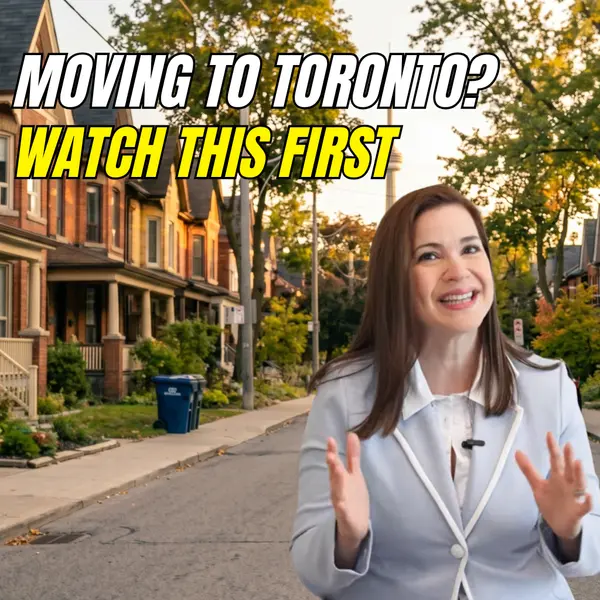
Jacquie Othen breaks down the three biggest barriers keeping young buyers out of Toronto real estate and shares practical strategies for parents and young adults who want to change that.
I watched my son's location icon move across the map late one night as he drove down to Austin for a new job. Part of me was incredibly proud. Part of me was gutted. And somewhere in between, I found myself thinking about a conversation I had with him and his friends about a week and a half earlier, where almost every one of them said they had no intention of ever buying a home.
As a Toronto real estate professional with 15 years in the market, that hit differently than it might for anyone else. These are smart, earning young adults. And they have fully written off homeownership. Not because they're irresponsible. Because they feel like the math doesn't work.
So let's talk about that math honestly. Because I think many parents and grandparents watching this are in a position to help more than they realize. And I think many young people have given up on options they haven't fully explored.
The Three Barriers Young Buyers Keep Running Into
When I talk to Millennials, Gen Z, and Gen Xers about homeownership, the same three things come up every single time. The carrying costs feel unmanageable. The down payment feels impossible. And the places they can actually afford aren't where they want to live. Those three things are real. I'm not dismissing any of them. But each one has more flexibility than most young buyers assume.
Carrying Costs: The Honest Conversation About What You're Spending Now
Rental rates in Toronto have been sliding for the past couple of years. That's a fact, and it's not nothing. If rent is lower than a mortgage payment, you're going to feel like renting is the smarter move. In the short term, you might even be right. But you're not building anything either. Every rent payment leaves your account and builds equity for someone else.
The question isn't whether a mortgage payment is higher than rent right now. The question is where your money is going and what it's doing for you ten years from now. I hear a lot from young people about saving through TFSAs and RRSPs, and that's genuinely good. But RRSPs aren't doing anything meaningful for a 22-year-old for another four decades. Real estate capital growth can work on a much shorter timeline.
What I ask young people to do is track their actual spending for six months. Not a snapshot. Six months of real data. Because what I see again and again is that the gap between rent and a mortgage payment is often smaller than people think, and the money to close that gap is already leaving their account on things that aren't building anything. Subscriptions, delivery apps, dining out, and impulse online shopping. I'm not judging any of it. I've tightened up plenty myself. But when you see it laid out month after month, the math changes.
A first-time buyer in Toronto who can redirect $800 to $1,200 a month from discretionary spending is often much closer to qualifying for a mortgage than they think. It requires cuts that sting a little. That's exactly what your parents did, and their parents before them.
Why Condos Make Sense as an Entry Point Right Now
If carrying costs are the concern, condominiums are worth a serious second look. Condos in Toronto right now are among the most competitively priced they've been in years. Purchase prices are lower than for freehold homes, property taxes are lower because you're sharing a vertical building rather than owning land outright, and the maintenance picture is different in ways people don't always account for.
You're not paying for a new furnace. You're not hiring someone to redo the roof. You're not maintaining a yard. Your maintenance fee covers the building envelope, the amenities, and the property management. And those amenities often replace services you're already paying for separately: gym memberships, pet-washing services, shared workspaces. The net monthly picture is closer than the sticker price suggests.
If you're a young professional without kids, not looking to be in the suburbs with a double garage, a well-located Toronto condo could be your best first move. It gets you into the market. It starts building equity. And it positions you to step up to something larger in four or five years when your income has grown, and your equity has compounded. Nobody is buying their forever home first. The people who have built real wealth in Toronto real estate have usually moved three, four, or five times, each time buying up with the equity they accumulated.
The Location Tradeoff Is Temporary
The other thing I keep hearing is that young buyers don't want to end up somewhere they don't want to be. I get that. When I bought my first home, I went from Toronto to Oak Ridges, a 45-minute drive that felt like packing a lunch. That house cost $350,000 about 25 years ago. It's worth close to $2 million today. I didn't love leaving the city. That investment was one of the best financial decisions I ever made.
Here's the thing: if you don't have young kids yet, the pain point is mostly about commute time. And in Toronto, an extra 30 minutes on the GO train to reach affordable housing is not a real hardship when it already takes close to an hour to get anywhere across the city on a bad day. An entry-level home or condo in Leaside, Don Mills, or Yonge and Eglinton may not be King West, but it's Toronto real estate. And in five years, the equity you've built starts opening doors to the places you actually wanted to be.
The trap many young buyers fall into is treating the first purchase as if it has to be the permanent one. It doesn't. It's a starting position, not a destination.
The Down Payment: Where Families Can Make the Biggest Difference
This is the hardest one and the most important one. The down payment is the single biggest obstacle for most young buyers in Toronto right now, and it's the one area where family support can genuinely change someone's trajectory.
I've seen many different approaches over my career. Parents who match whatever the child has saved. Parents who top up and cover closing costs. Grandparents who offer a structured loan. Every family is different, and every approach is valid. What I will say is that I'm not a huge fan of gifting the entire down payment without any contribution from the buyer. Skin in the game matters. When someone has saved $40,000 or $60,000 of their own money, they have a relationship with that money. They're less likely to treat the property as a windfall and more likely to treat it as a foundation.
If you are going to help your child or grandchild get into the market, please get a lawyer involved first. Whether it's a gift, a loan, a co-sign, or a registered mortgage, there are important legal and tax considerations that protect everyone involved. A family lawyer or real estate lawyer can walk you through the right structure for your situation. Set expectations clearly from the start. If it's a loan, talk about repayment timelines before the papers are signed, not two years later when life has gotten more complicated.
I'll also say this directly to any parents or grandparents who are in a comfortable position: consider helping now, while you can see the impact. There's a difference between leaving something in an estate and watching your child actually settle into their own home. One of those you'll get to enjoy together. If you're thinking about contributing, talk to your financial planner first to make sure what you're offering doesn't leave you exposed at 80 or 85. Give from a position of stability, not sacrifice.
For those where a direct cash contribution isn't possible, a home equity line of credit against an existing property can sometimes fund a more modest down payment. Even $15,000 or $20,000 toward closing costs can be the difference between a deal that works and one that doesn't. Understanding what your own home is worth is a good place to start that conversation.
Government Programs Worth Knowing About
Young buyers who have been saving through RRSPs or the First Home Savings Account (FHSA) have tools that didn't exist a generation ago. The FHSA allows first-time buyers to contribute up to $8,000 per year, with a lifetime maximum of $40,000, and those contributions are tax-deductible. The RRSP Home Buyers' Plan lets qualifying buyers withdraw up to $35,000 from their RRSP for a first purchase, with 15 years to repay.
The federal government has also extended the HST rebate to new-construction purchases by first-time buyers, reducing the upfront cost of a pre-construction condo substantially. If you've been looking at resale and feeling priced out, pre-construction is worth a serious conversation. It also allows time to save during the construction period, which can be a real advantage for buyers who are close but not quite there yet. Our first-time buyer services page provides more details on how these programs work.
None of these programs replaces the need for savings and planning. But they are genuine advantages that make the math more workable for buyers who use them strategically rather than treating them as a last resort.
A Note to Young Buyers Who Have Given Up
If you are in your 20s or early 30s, watching your friends rent and telling yourself homeownership isn't something that happens for people like you, I want to push back on that. Not because I'm trying to sell you something. Because I've watched too many people wait for the perfect moment that never arrives and miss the years when their money could have been compounding.
You don't need to buy where you want to live forever. You need to buy something, somewhere, that fits what you can manage today. The right buyer's agent will help you find that. The equity you build in years one through five is what gives you choices in years six through ten. Toronto real estate has rewarded patient, strategic buyers consistently over the long term. That's not a promise about any specific property. It's just the record.
If you're thinking about approaching your parents about help with a down payment, do it directly. Call a family meeting. Have the real conversation. Most parents who are in a position to help are waiting for you to ask, or they're waiting for the right moment to offer. Either way, a clear, honest conversation is better than silence on both sides.
The seniors and downsizing clients I work with have often built their financial security through exactly this kind of long-game thinking. They bought something modest. They paid it down. They moved up. They did it again. That's still how it works. It's just harder to start. That's real. And it's not insurmountable.
Frequently Asked Questions
How much do you really need for a down payment on a Toronto condo in 2025?
For a Toronto condo priced under $500,000, the minimum down payment is 5% of the purchase price. On a $450,000 condo, that's $22,500. Purchases between $500,000 and $999,999 require 5% on the first $500,000 and 10% on the remainder. Any purchase at $1 million or above requires a 20% down payment. Most first-time buyers in Toronto target the $450,000 to $650,000 range for a one-bedroom or one-plus-den condo, which puts the minimum down payment between $22,500 and $40,000. Closing costs, including land transfer tax, legal fees, and title insurance, typically add another $10,000 to $25,000, depending on the property and whether first-time buyer rebates apply.
Is buying a condo in Toronto actually a good investment right now?
Toronto condos are currently priced lower than in recent years, creating a better entry point for buyers who qualify. Whether any specific condo is a good investment depends on the building, the location, the maintenance fee structure, and what you pay for it. Historically, well-located Toronto condos have appreciated meaningfully over 5 to 10-year horizons. The more important question for most first-time buyers is not whether a condo will outperform the stock market, but whether buying now gets them into a forced-savings vehicle that builds equity instead of losing rent money every month. For most buyers, the answer to that question is yes. Talking to an experienced buyer's agent about specific buildings and neighbourhoods is the right first step.
What is the First Home Savings Account (FHSA) and how does it work?
The FHSA is a registered account introduced by the federal government that allows first-time homebuyers to save up to $8,000 per year, with a lifetime contribution limit of $40,000. Contributions are tax-deductible, like an RRSP, and qualifying withdrawals for a first home purchase are tax-free, like a TFSA. That combination makes it one of the most efficient savings vehicles available to first-time buyers. To open an FHSA, you must be a Canadian resident, at least 18 years old, and a first-time buyer as defined by the Canada Revenue Agency. The account can be held for up to 15 years before it must be used or transferred.
Can parents legally gift a down payment to their child in Canada?
Yes. Parents can gift money to their child for a down payment in Canada, and lenders will accept gifted down payments provided the gift is documented with a signed gift letter confirming the money does not need to be repaid. There is no gift tax in Canada, so the transaction does not trigger a tax liability for either party in most circumstances. That said, families should consult a real estate or family lawyer before proceeding, particularly if the child has a partner, the parents want some form of repayment, or the gift is substantial enough to affect the parents' own financial security. Structuring it correctly from the start protects everyone, including the relationship.
What is the HST new construction rebate for first-time buyers in Toronto?
The federal government has extended a full HST rebate on new construction purchases for first-time buyers, eliminating the previously high cost of pre-construction condos. For buyers who qualify, this rebate can save $20,000 to $40,000, depending on the purchase price and province. The rebate applies to the purchaser's principal residence and is subject to income and eligibility conditions. Because the rules and end date can change, buyers should confirm current eligibility criteria with their real estate lawyer or first-time buyer specialist before signing a pre-construction agreement.
Should young buyers look at pre-construction condos or resale properties?
Both have merit depending on the buyer's timeline and financial position. Resale condos offer certainty: you can see the unit, the building, and the neighbourhood before committing, and you know what your carrying costs will be from day one. Pre-construction requires more patience, typically two to four years between signing and occupancy, but the extended timeline gives buyers a period to continue saving while the unit is being built. Pre-construction also benefits from the HST rebate for qualifying first-time buyers and sometimes offers better pricing in the early sales phases. The right choice depends on individual circumstances, and a knowledgeable agent can help evaluate both options honestly. Our buyer services team works with clients through both processes.
What neighbourhoods should first-time buyers consider in Toronto for an affordable entry point?
First-time buyers who are open to exploring outside the most central Toronto neighbourhoods consistently find better value. Areas like Don Mills and Leaside offer relatively accessible pricing with strong long-term fundamentals. The Beaches and Yonge and Eglinton tend to attract buyers who want walkable urban living with good transit access. Further out, communities that were once considered remote, as Oak Ridges was 25 years ago, have consistently outperformed expectations as the city has grown around them. The most important thing is to get in. Location preferences can shift as equity builds and life circumstances change.
Your Child Wants to Buy. You're Not Sure How to Help.
Whether you're a parent trying to figure out the right way to contribute or a young buyer who wants an honest look at what's actually possible, Jacquie is happy to have that conversation. No pressure, no pitch.
Talk to Jacquie
Categories
Recent Posts




GET MORE INFORMATION
